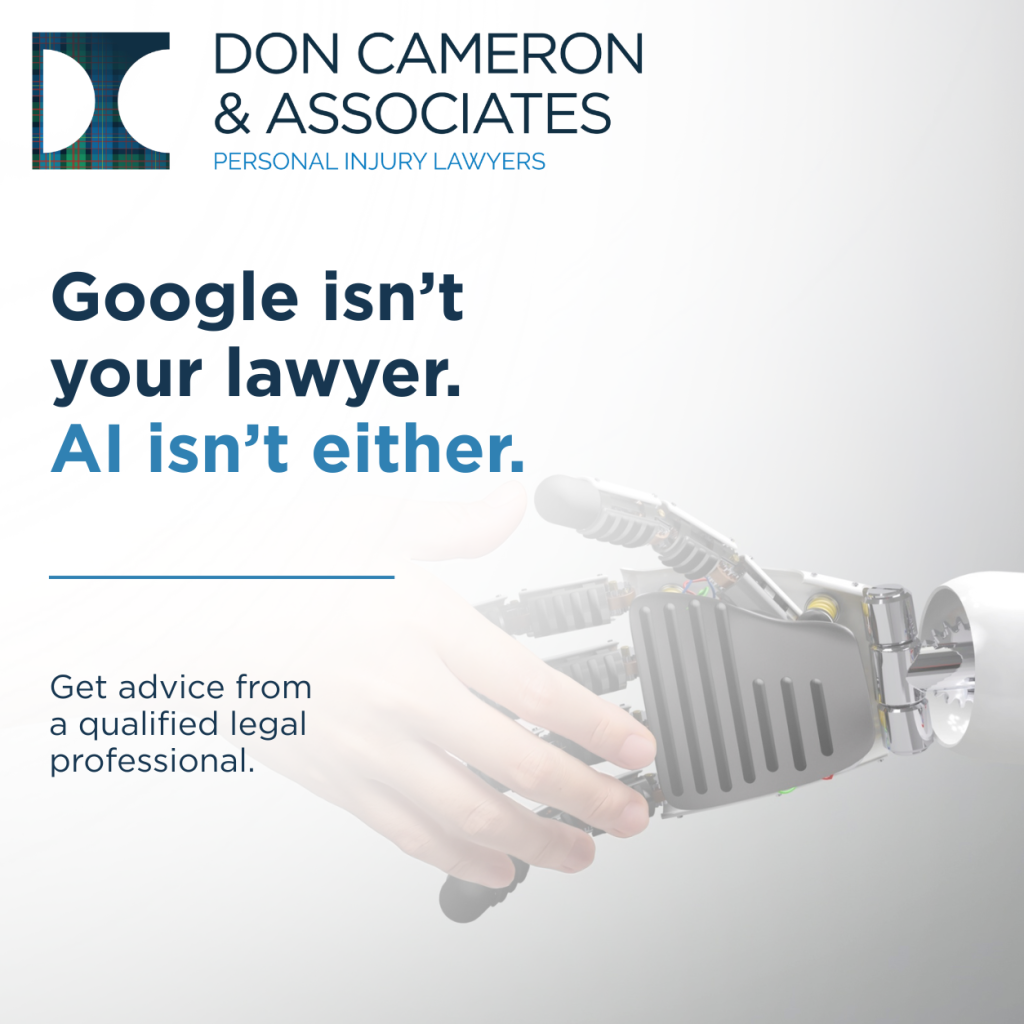
Artificial intelligence has become increasingly popular, with many people turning to AI tools for quick answers to legal questions. While AI can be useful for providing general information, it should never be relied upon as a substitute for professional legal advice.
One of the biggest risks of using AI for legal guidance is that it can provide information that is incorrect, outdated, incomplete, or taken out of context. Laws frequently change and legal rights can vary significantly depending on the specific facts of a case, the state or territory involved and the applicable legislation. AI tools may not always account for these important distinctions.
Legal matters often involve complex issues that require careful analysis and professional judgment. A seemingly minor fact can completely change the outcome of a claim. For example, in workers compensation, motor vehicle accident, medical negligence, or public liability matters, eligibility for compensation may depend on specific legislative requirements, time limits, medical evidence, or factual circumstances that an AI tool cannot properly assess.
Another concern is that AI cannot take responsibility for the advice it provides. If incorrect information leads to a missed deadline, an unsuccessful claim, or a lost legal right, the consequences can be significant.
A qualified lawyer does far more than provide information. They assess your individual circumstances, consider the relevant law, identify potential risks and provide advice tailored to your specific situation. They can also advocate on your behalf and ensure your rights are protected throughout the legal process.
While AI can be a useful starting point for understanding legal concepts, it should be viewed as a research tool rather than a source of legal advice. When your rights, finances, or future are at stake, there is no substitute for obtaining advice from an experienced legal professional.
At Don Cameron & Associates, we encourage anyone with legal concerns to seek personalised advice from a qualified lawyer before making important decisions about their claim.